Why Creative Taste Matters More with AI Tools
It's becoming increasingly clear that as AI tools get better at generating content, the importance of your own creative taste isn't diminishing, it's……
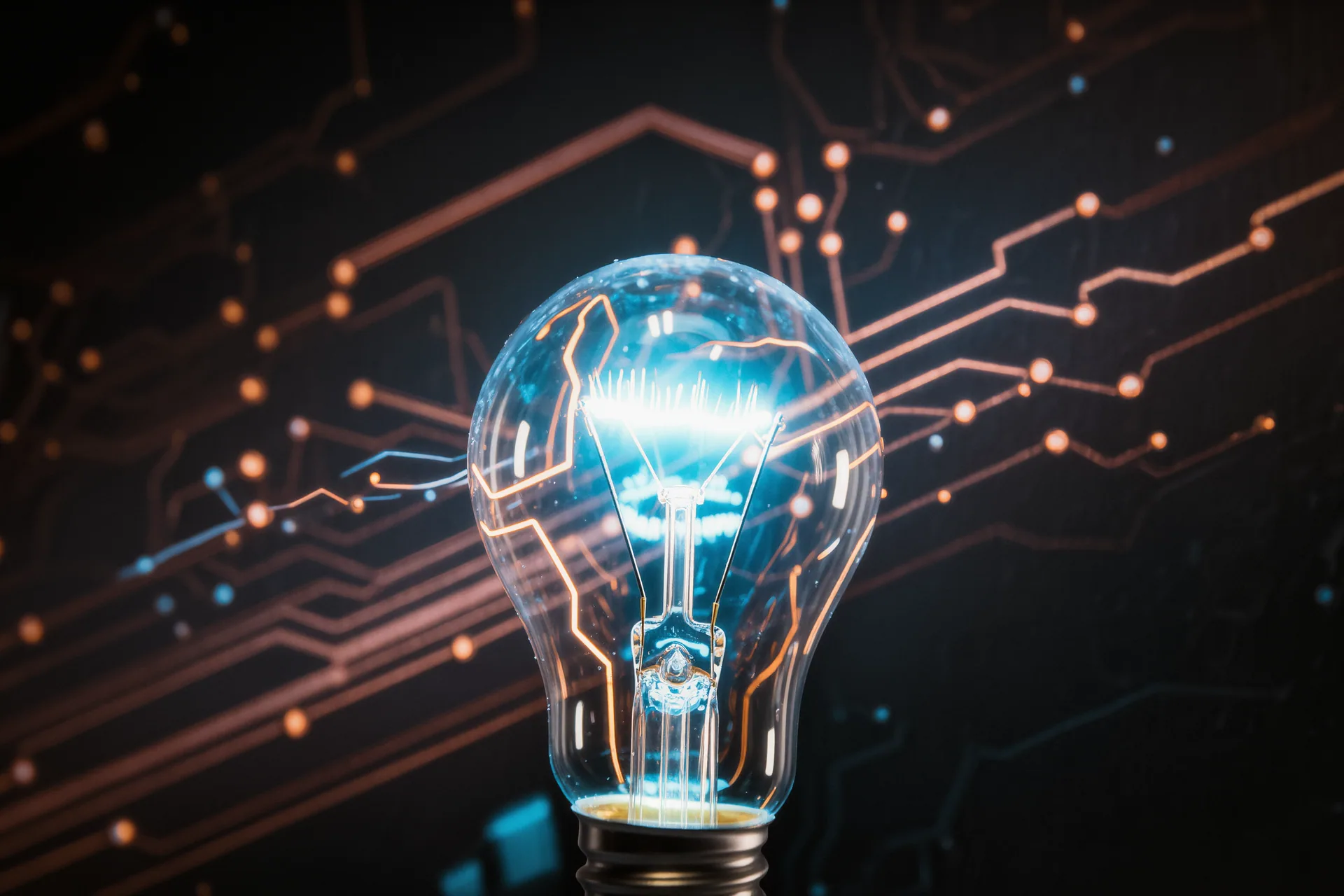
It's becoming increasingly clear that as AI tools get better at generating content, the importance of your own creative taste isn't diminishing, it's actually skyrocketing. Think about it: with AI capable of churning out decent drafts, variations, or even complete pieces, what sets your work apart is the you in it. Your discerning eye, your unique perspective, your gut feeling about what truly resonates. AI is a powerful paintbrush, but you're the artist holding it.
We're living in a time where tools like ChatGPT, Midjourney, DALL-E, and countless others are democratizing creative output. They can write code, compose music, generate images, and churn out text at a speed and volume we could only dream of a decade ago. This isn't something to fear, but it is something to understand. This accessibility means the basic building blocks of creative work are becoming readily available. The "effort" of simply producing something is being significantly reduced.
From Scarcity to Abundance: A New Creative Landscape
For a long time, the barrier to entry in many creative fields was the sheer difficulty of execution. Learning to paint, write fluently, compose a song, these took years of dedicated practice. Now, AI can help bridge that gap. You can generate an image that would have taken a skilled illustrator hours in minutes. You can get a first draft of an article that would have taken a writer a morning to assemble. This shift from scarcity of production to an abundance of options fundamentally changes the game.
The Value Shift: From Maker to Curator
So, if AI can make, what's our role? It’s evolving. We're moving from being solely the "makers" to becoming increasingly vital "curators," "editors," and "directors." Your ability to sift through the generated options, to identify what truly sings, and to refine it into something impactful is where the real value lies. It's like having an assistant who can do all the grunt work, freeing you up for the higher-level thinking and decision-making.
Taste: The Uniquely Human Algorithm
What exactly is creative taste? It’s not just knowing what looks good or sounds pretty. It’s a complex interplay of your personal experiences, your cultural background, your emotional responses, your understanding of what connects with audiences, and your intuition about what feels right. It's the "je ne sais quoi" that makes a piece of art, writing, or design memorable and meaningful. AI, at its core, is pattern recognition and data synthesis. It doesn't feel or experience in the human sense.
The Nuance of Emotion and Connection
AI can analyze vast datasets of human expression and learn to mimic emotional tones. It can produce text that sounds sad or happy, or images that evoke certain feelings based on training data. However, it doesn’t understand sadness, joy, or the complex tapestry of human emotions in the same way a human does. Your taste is informed by your own lived emotional experiences, allowing you to imbue your work with genuine resonance.
The Power of Context and Subtlety
Creative taste allows you to understand the subtle layers of meaning, the unspoken context, and the cultural nuances that make a piece of work truly powerful. AI might generate a statistically "correct" response, but it might miss the wink, the irony, or the deeply personal reference that elevates good to great. Your taste acts as a sophisticated filter, ensuring that the output aligns with a deeper purpose and understanding.
How AI Amplifies the Need for Your Discernment
Instead of replacing the need for taste, AI tools demand a more refined and active application of it. When you have access to a multitude of possibilities, making the right choice becomes infinitely more important. Imagine being in a massive library with an AI assistant who can find any book instantly. The challenge isn't finding a book; it's choosing the perfect book for your needs, knowing its potential impact and quality.
Selecting the Wheat from the Chaff
AI can generate dozens of variations of an image, a headline, or a melody. Without a strong sense of taste, you're easily overwhelmed. You might pick something that's technically competent but lacks soul, or something that's a bit… off. Developing your taste is about building the muscle to quickly identify the gems among the many acceptable options. It's about knowing what feels authentic and impactful, not just what's readily available.
Directing the AI Symphony
Think of AI as highly skilled but unopinionated musicians. They can play any note perfectly, at any tempo. You, with your taste, are the conductor. You don't just tell them to play; you guide them on how to play, what emotion to convey, and when to crescendo. Your taste is the guiding force that shapes the raw output into a coherent and compelling performance.
Developing Your Creative Taste in the AI Era
This isn't about having a "natural" talent for taste. It's a skill that can be honed and developed. In fact, the age of AI provides us with incredible opportunities to learn and refine our discernment.
Immerse Yourself in Greatness
The best way to develop taste is to expose yourself to exceptional work across various mediums. Study the masters. Analyze what makes their creations stand out. Why does a particular painting capture your eye? What makes a piece of music so moving? What writing keeps you turning pages? Pay attention to the details.
Deconstruct and Analyze
Don't just passively consume. Actively deconstruct. When you encounter something you love, ask yourself why. What are the elements that contribute to its success? Is it the color palette? The rhythm of the sentences? The unexpected chord progression? This analytical approach helps you build a mental library of what works and why.
Experiment and Iterate (with AI!)
Use AI tools to actively experiment. Generate multiple options for a design, a piece of text, or a musical phrase. Then, use your developing taste to select the best ones, tweak them, and see how they evolve. This iterative process, guided by your judgment, is a powerful learning loop.
Seek Feedback (from humans!)
While AI can provide data, human feedback is invaluable for taste development. Share your AI-assisted work with trusted peers, mentors, or a discerning audience. Listen to their reactions and interpretations. What resonates with them? What falls flat? This external perspective helps you calibrate your own internal compass.
The Critical Role of Editing and Refinement
AI-generated content often needs a human touch to elevate it beyond mediocrity. This is where your taste truly shines, particularly in the editing process. AI can produce a grammatically correct sentence, but you know if it has a compelling voice. It can generate a visually appealing image, but you know if it truly conveys the intended message.
Beyond Spellcheck: The Art of Voice and Tone
AI can write like many people. Your taste helps you imbue the writing with your voice, or the voice that is most appropriate for the project. This involves more than just grammar; it's about personality, rhythm, and the subtle nuances of communication. You're the one who decides if a tone should be more direct, more empathetic, more humorous, or more formal.
Visual Storytelling: More Than Just Pretty Pixels
In visual arts, AI can create technically perfect images. However, your taste guides the composition, the lighting, and the overall aesthetic to tell a story. Is the subject in focus? Does the background detail enhance or detract? Does the image evoke the desired mood? These are decisions guided by your artistic sensibility.
The "Good Enough" Trap: Why Your Taste Resists
AI can quickly churn out something that's "good enough." Your taste is what pushes you beyond that. It's the internal alarm bell that whispers, "This could be better." It's the drive to refine, polish, and perfect until the output truly embodies your vision and resonates with its intended audience.
AI as a Collaborator, Not a Replacement
The most effective way to think about AI tools is as powerful collaborators. They are extensions of your own creative capabilities, not replacements for your unique perspective and judgment. When you approach AI with a strong sense of your own creative taste, you unlock its true potential.
Augmenting, Not Abdicating, Your Creativity
AI tools are designed to augment our abilities. They can handle the repetitive tasks, generate options, and speed up production. However, they cannot abdicate the responsibility of creative direction. Your taste is the steering wheel, guiding the AI engine towards a meaningful destination.
The Future is Hybrid: Human Ingenuity Meets Machine Efficiency
The future of creative work isn't entirely human or entirely AI-driven. It's a hybrid. It's about leveraging the strengths of both. The efficiency and scale of AI, combined with the insight, emotion, and discernment of human taste, will create work that is more innovative, impactful, and human than ever before.
Mastering the Instrument: Your Taste as the Key Skill
As AI tools become more ubiquitous, the fundamental skill that will set creators apart is not mastery of the AI itself, but mastery of their own creative taste. It's the ability to wield these powerful tools with intention, discernment, and a deep understanding of what makes art, communication, and design truly connect. Your taste is your unique signature in an increasingly automated world.
1. What is the importance of creative taste in the context of AI tools?
2. How do AI tools incorporate creative taste into their decision-making processes?
3. What are the potential benefits of integrating creative taste into AI tools?
4. Are there any limitations or challenges associated with using creative taste in AI tools?
5. How can individuals and organizations leverage AI tools to enhance their creative processes while considering creative taste?
More from AI Creativity & Media
How AI Image Prompts Improve Creative Direction
Figuring out how to get AI to generate the images you actually want can feel like a quest. But the good news is, with the right approach to your……
AI Music Generation: Opportunities for Brands
AI music generation offers brands a powerful new toolkit for creating unique auditory experiences, enhancing marketing efforts, and connecting with……
How AI Can Help Create Better Social Media Reels
Ever wondered if there's a smarter way to craft those engaging social media Reels? The answer is a resounding yes, and it involves harnessing the……