AI as a Co-Pilot, Not a Replacement: A Practical View
So, will AI take your job? The short answer is: probably not. At least, not directly and not in the way many people fear. Think of AI more as a……
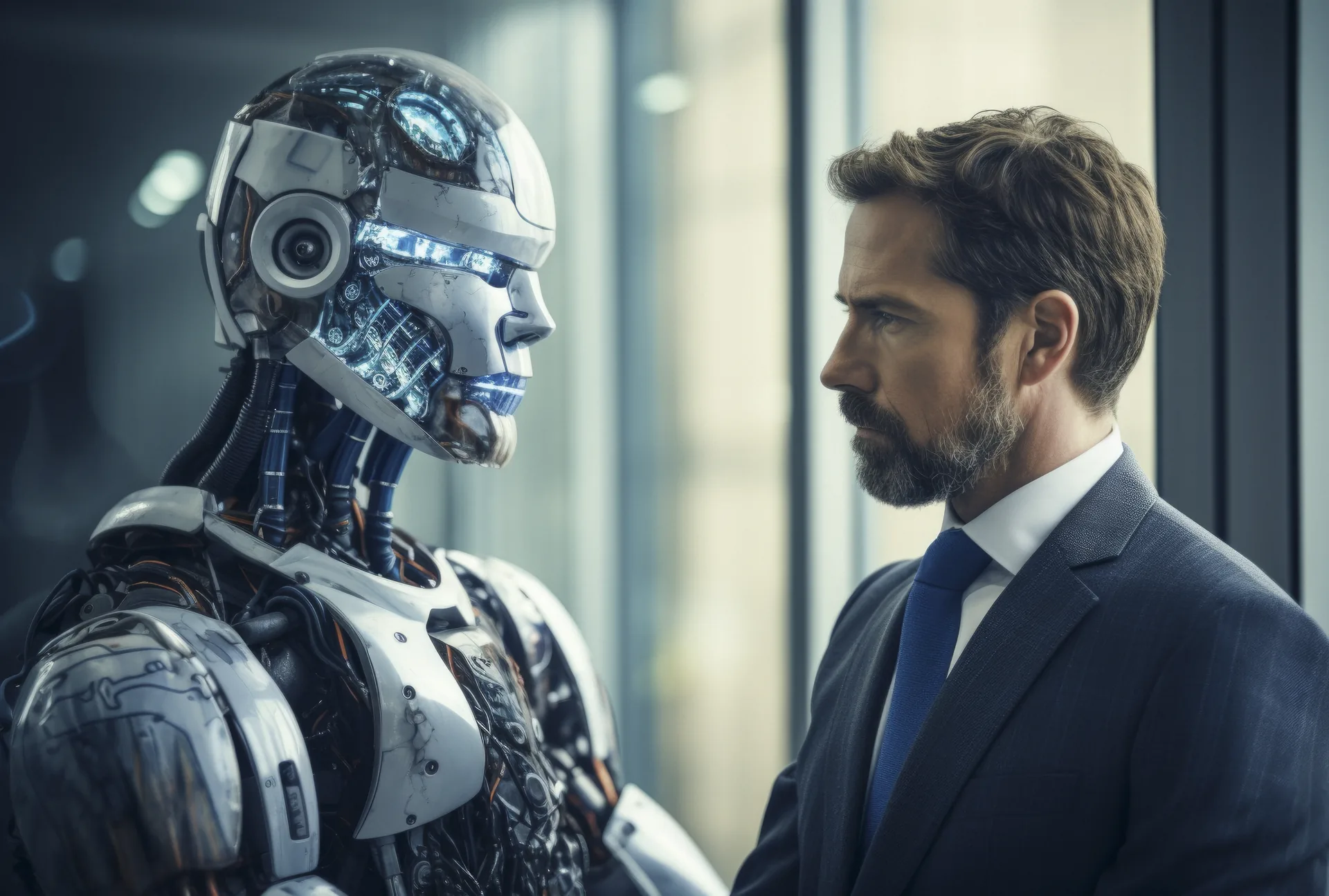
So, will AI take your job? The short answer is: probably not. At least, not directly and not in the way many people fear. Think of AI more as a super-powered assistant or a "co-pilot", a tool that helps you do your job better, faster, and more efficiently. It's about augmenting human capabilities, not outright replacing them. This distinction is crucial for understanding how AI is actually impacting the workplace and how we can best adapt to it.
Embracing AI as a co-pilot means shifting our perspective from fear of job loss to excitement about enhanced productivity and new opportunities. It's about recognizing that AI excels at certain tasks, freeing us up to focus on what humans do best.
What AI is Good At (Your Co-Pilot's Strengths)
Imagine your co-pilot as a meticulous data analyst, a lightning-fast researcher, or a tireless drafter.
- Repetitive and Tedious Tasks: From data entry and scheduling to generating routine reports, AI can automate these time-consuming activities, allowing humans to concentrate on higher-value work.
- Pattern Recognition and Large Data Analysis: AI can sift through massive datasets significantly faster and more accurately than a human, identifying trends, anomalies, and insights that might otherwise be missed. Think fraud detection, medical diagnosis, or market trend analysis.
- Information Retrieval and Synthesis: Need to quickly summarize a 200-page document or find specific information across thousands of articles? AI can do it in seconds, providing a distilled version or pulling out key facts.
- Drafting and Content Generation (First Pass): AI can generate initial drafts of emails, reports, marketing copy, or even code. This isn't about producing a final, polished product, but rather providing a solid starting point that a human can then refine and personalize.
- Personalization and Recommendation: AI powers the highly personalized experiences we see online, from product recommendations to tailored news feeds. This can be applied in business for customized customer service or targeted outreach.
What Humans Are Good At (Your Role as the Lead Pilot)
While AI has its strengths, humans possess unique qualities that are difficult, if not impossible, for current AI to replicate. These are your areas of undeniable expertise.
- Critical Thinking and Problem Solving: AI can process information, but true critical thinking, evaluating complex situations, considering ethical implications, and devising novel solutions, remains a human domain.
- Creativity and Innovation: While AI can generate variations of existing ideas, groundbreaking innovation and truly original creative leaps still require human intuition and imaginative thinking.
- Emotional Intelligence and Empathy: Understanding nuances in human interaction, reading between the lines, and providing empathetic support are deeply human traits. Customer service, therapy, and leadership all rely heavily on these skills.
- Strategic Planning and Decision Making: AI can present data and potential consequences, but the ultimate strategic decisions, especially those with significant unknown variables or long-term implications, require human judgment and foresight.
- Complex Communication and Persuasion: Crafting compelling arguments, delivering persuasive presentations, and navigating intricate social dynamics in communication are areas where human finesse excels.
The Synergy: How AI and Humans Work Together
The real power emerges when we leverage the strengths of both AI and humans in a collaborative fashion. This isn't about either/or, but rather how they can create a more effective "us."
Enhancing Productivity
Imagine a lawyer using AI to review thousands of legal documents for relevancy, freeing them to focus on crafting arguments and advising clients. Or a doctor using AI to analyze medical images for subtle anomalies, allowing them more time for patient interaction and personalized treatment plans. AI takes on the grunt work, humans add the nuance and high-level thinking.
Fostering Innovation
AI can accelerate research and development by processing vast amounts of data to identify promising avenues or discard dead ends. This provides a springboard for human innovators, allowing them to explore more options and build upon AI-generated insights to create something entirely new.
Improving Decision Making
AI provides data-driven insights and predictive analytics that can inform human decisions. Instead of guessing, leaders can make choices backed by robust analysis, while still applying their experience and intuition to navigate unforeseen circumstances or ethical dilemmas. It's about augmenting human judgment, not replacing it.
Personalizing Experiences
AI can tailor educational content, customer support, or product recommendations to individual needs. Humans then step in for complex queries, empathetic conversations, or when a unique, personal touch is required, creating a seamless blend of efficiency and human connection.
Adapting to the AI Era
The emergence of AI isn't about being replaced; it's about being prepared. Those who embrace AI as a tool will be the ones who thrive.
Upskilling and Reskilling
This is perhaps the most practical takeaway. Don't fear AI; learn how to use it. Organizations and individuals need to invest in training that focuses on:
- Prompt Engineering: Learning how to effectively communicate with AI models to get the best results. It's an emerging skill that's surprisingly powerful.
- Data Literacy: Understanding how data is collected, analyzed by AI, and how to interpret the results.
- Critical Evaluation of AI Output: AI isn't perfect. Humans need to be able to critically assess its outputs, identify potential biases or inaccuracies, and refine them.
- Collaboration with AI Tools: Getting comfortable working alongside AI, viewing it as another member of your team.
Focus on Uniquely Human Skills
While AI handles the routine, we need to double down on what makes us uniquely human. Cultivating skills like creativity, emotional intelligence, strategic thinking, and adaptive problem-solving becomes even more critical. These are the aspects of your job that AI struggles with, and where your value will only increase.
Rethinking Job Roles
Instead of simply automating existing jobs, we'll see many roles evolve. New job titles will emerge that involve managing, supervising, and collaborating with AI systems. Existing roles will be augmented, allowing professionals to accomplish more and focus on higher-level tasks previously unmanageable. Think "AI-enhanced analyst" or "AI-assisted designer."
Addressing Common Concerns
It's natural to have questions and worries about such a significant technological shift. Let's tackle a few head-on.
The "Job Stealer" Myth
As discussed, AI primarily automates tasks, not entire jobs. While specific tasks within a job might be taken over, the overall role often transforms. The key is to adapt and learn how to integrate AI into your workflow. Historically, major technological shifts have created more jobs than they destroyed, albeit different kinds of jobs.
Bias and Ethics
AI models are trained on existing data, and if that data contains biases, the AI will perpetuate them. This is a significant concern.
- Human Oversight is Key: This is where the human co-pilot steps in. It's our responsibility to scrutinize AI outputs, identify and mitigate biases, and ensure ethical deployment.
- Ethical AI Development: There's a growing field dedicated to developing AI responsibly, incorporating fairness, transparency, and accountability from the ground up.
The Learning Curve
Yes, there will be a learning curve. Adopting any new tool requires effort. However, many AI interfaces are becoming increasingly user-friendly, and the benefits often outweigh the initial learning investment. Organizations have a role to play here by providing accessible training.
The Future is Collaborative
The future workplace won't be dominated by robots or entirely human. It will be a collaborative environment where humans and AI work synergistically. Those who understand this dynamic and prepare for it will be the ones leading the charge.
Think of it less as a threat and more as an opportunity. An opportunity to offload the mundane, amplify your strengths, and redefine what human productivity and creativity look like in the 21st century. Your co-pilot is ready; are you ready to take the controls?
What is the role of AI in the context of co-piloting?
How does AI contribute to the overall safety of aircraft operations?
What are the limitations of AI in the co-piloting role?
How do pilots interact with AI co-pilots in the cockpit?
What are the potential future developments in AI co-piloting technology?
More from AI News & Trends

What the Next Phase of AI Adoption Could Look Like
The next phase of AI adoption, simply put, is all about moving past the novelty and into deeply integrated, truly impactful applications across every……

The New AI Vocabulary Every Founder Should Know
Let's dive into some of the AI terms that are becoming increasingly important for founders to grasp. Think of this as your practical guide to……

How AI Summaries Are Changing Website Traffic
So, how are AI summaries changing website traffic? In short, they're creating a subtle but measurable shift in how people find and interact with……