9 Jobs That Will Be Transformed by AI
Well, you've probably been hearing a lot about AI lately, haven't you? It seems to be everywhere. And the big question on a lot of minds is: will AI……
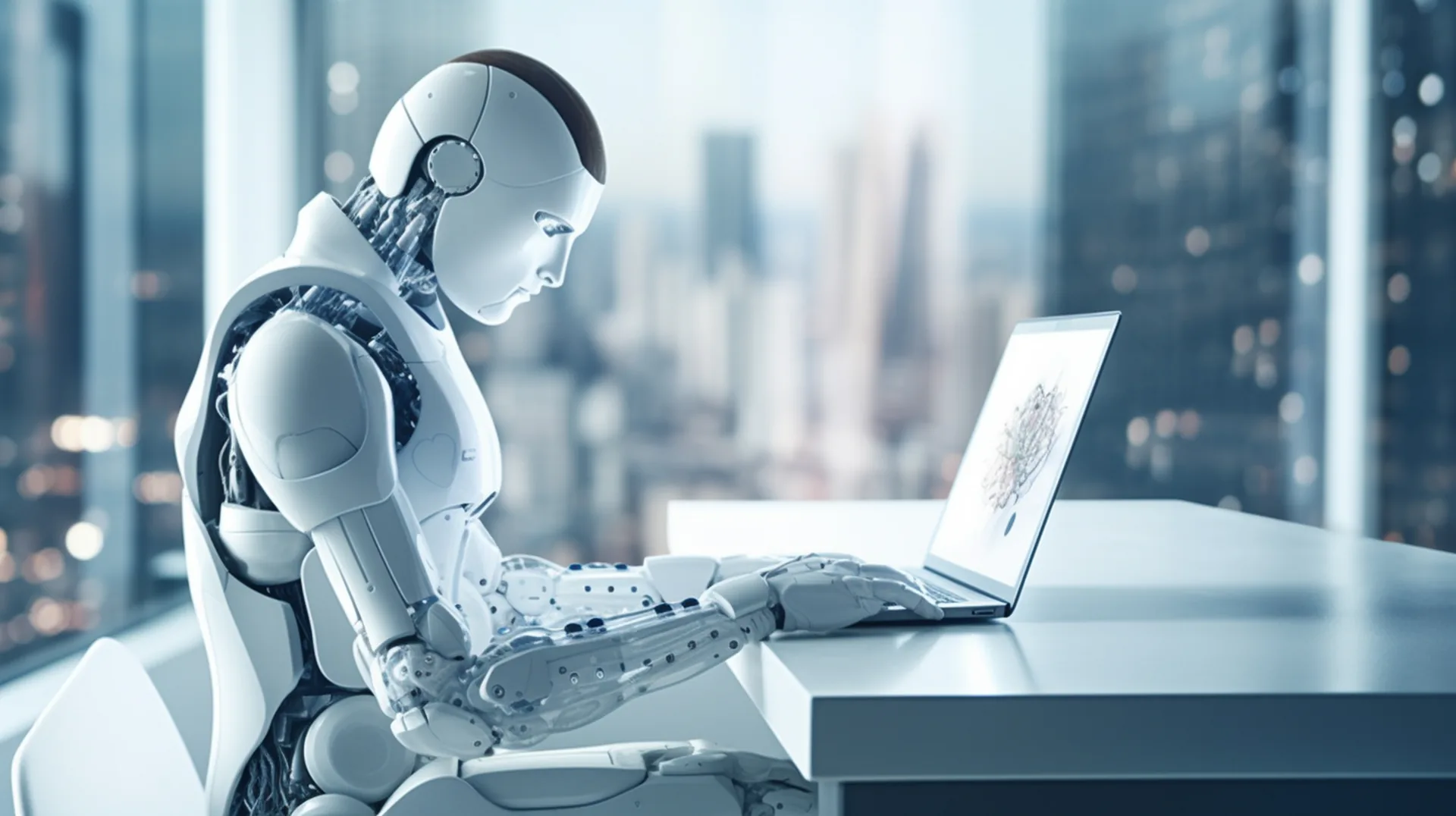
Well, you've probably been hearing a lot about AI lately, haven't you? It seems to be everywhere. And the big question on a lot of minds is: will AI take our jobs? The short answer is: not necessarily, but many jobs will definitely change. Instead of disappearing, roles will likely evolve as AI becomes a powerful co-worker, automating certain tasks and freeing up humans to focus on others. Think of it less as replacement and more as augmentation.
This isn't about robots taking over the world. It's about tools becoming smarter and helping us do our jobs better, faster, and sometimes, more creatively. So, what exactly does this transformation look like for different careers? Let’s dive into the details.
Customer service is often the first place people think of when AI comes up. And there’s good reason for that. AI-powered chatbots and virtual assistants are already handling a significant chunk of routine inquiries, freeing up human agents for more complex issues.
Chatbots Handling the Basics
Think about those endless FAQs and simple troubleshooting steps. AI is brilliant at this. Chatbots can instantly access vast databases of information to answer common questions, guide users through basic processes, and even process simple transactions. This means customers get faster responses to straightforward problems, 24/7.
Humans Tackling Nuance and Empathy
Where AI still struggles is with true emotional intelligence and complex problem-solving. This is where human customer service reps will shine. Their role will shift from simply providing answers to de-escalating frustrated customers, understanding subtle cues, and finding creative solutions to situations that fall outside of standard protocols. They’ll become the strategists, the problem-solvers, and the empathy providers.
Personalized Support at Scale
AI can also help humans by analyzing customer data to predict needs and preferences. This allows service reps to offer more personalized and proactive support. Imagine an agent knowing a customer’s history and potential issues before they even pick up the phone. That’s a game-changer for building loyalty and satisfaction. The focus moves from reactive problem-solving to proactive relationship building.
2. Content Creators: AI as a Smarter Draft Assistant
Writers, designers, artists: our creative fields are also seeing a seismic shift thanks to AI. It’s not about AI writing the next great novel on its own, but it’s certainly becoming an invaluable tool in the creative process.
AI for Idea Generation and Outlining
Staring at a blank page? AI can help. Tools can generate blog post ideas, suggest article structures, or even create initial outlines based on keywords and prompts. This can overcome writer's block and provide a solid starting point, saving creators significant time in the initial brainstorming phase.
Drafting and Editing Support
AI can produce first drafts of articles, marketing copy, or social media posts. While these drafts will almost always require human refinement for tone, accuracy, and originality, they can be a powerful way to accelerate the content pipeline. Similarly, AI excels at grammar checking, suggesting stylistic improvements, and even rephrasing sentences for clarity.
Visual Content Generation
Beyond text, AI is rapidly advancing in image and video generation. Designers can use AI to quickly create mockups, generate variations of visual elements, or even produce entirely new imagery for campaigns. This opens up new aesthetic possibilities and dramatically speeds up the visual content creation process. The key here is supervision: humans will curate, refine, and ensure brand consistency.
Ethical Considerations and Originality
As AI-generated content becomes more prevalent, the emphasis on human creativity, critical thinking, and ethical sourcing will increase. Creators will need to be adept at fact-checking AI outputs, ensuring originality, and adding their unique perspective, voice, and artistic intent that AI cannot replicate. This is about augmenting human creativity, not replacing it.
3. Software Developers: From Code Slinger to System Architect
The world of coding is perhaps one of the most obviously impacted. AI is already proving its mettle in assisting developers, and this will only grow.
AI-Assisted Code Generation
This is already a reality with tools like GitHub Copilot. AI can suggest lines of code, entire functions, and even automate repetitive coding tasks. Developers can spend less time writing boilerplate code and more time focusing on complex logic and architectural design. It’s like having a super-fast coding partner.
Debugging and Testing Efficiency
Finding and fixing bugs can be a time-consuming part of development. AI can analyze code for potential errors, predict bugs before they manifest, and even suggest solutions. Automated testing will also become more sophisticated, with AI identifying edge cases and optimizing test scenarios, leading to more robust software.
Code Optimization and Performance Tuning
AI can analyze code for performance bottlenecks and suggest optimizations to make applications run faster and more efficiently. This is especially crucial for large-scale systems and those dealing with massive datasets. It helps ensure software is not just functional, but also performant.
Shift Towards Higher-Level Design
With AI handling more of the grunt work of coding, developers will likely shift their focus to higher-level tasks. This includes system architecture, designing scalable solutions, and understanding the broader implications of software design. They will be the architects and strategists, guiding AI tools rather than just typing lines of code. The role becomes more about problem conceptualization and solution design.
4. Healthcare Professionals: AI as a Diagnostic and Administrative Ally
While AI won't be performing surgery on its own anytime soon, it's set to revolutionize how healthcare professionals work, from diagnosis to daily administrative tasks.
Enhanced Diagnostic Capabilities
AI algorithms can analyze medical images (like X-rays, MRIs, and CT scans) with remarkable accuracy, often spotting subtle anomalies that might be missed by the human eye. This doesn't replace radiologists, but it provides them with a powerful tool to enhance their diagnostic accuracy and speed. Think of it as a second opinion, backed by massive data analysis.
Personalized Treatment Planning
By analyzing a patient’s genetic data, medical history, and lifestyle, AI can help physicians create more personalized and effective treatment plans. This moves away from a one-size-fits-all approach, leading to better patient outcomes. It’s about tailoring medicine to the individual.
Streamlining Administrative Tasks
Doctors and nurses spend a significant amount of time on paperwork, scheduling, and data entry. AI can automate many of these administrative burdens, freeing up valuable time for direct patient care. This could involve transcribing patient notes, managing appointments, or even processing insurance claims.
Drug Discovery and Research Acceleration
AI is already speeding up the incredibly complex and expensive process of drug discovery. It can analyze vast datasets of biological information to identify potential drug candidates and predict their efficacy, accelerating the development of new treatments and therapies. This has massive implications for tackling diseases.
The Human Touch Remains Paramount
Despite these advancements, the empathetic and human aspects of healthcare remain irreplaceable. AI can provide data and analysis, but it's the human connection, the understanding of patient concerns, and the ability to provide comfort that are core to the healing process.
5. Legal Professionals: AI as a Research Assistant and Document Analyst
The legal profession, known for its reliance on meticulous research and extensive documentation, is ripe for AI-driven transformation.
Accelerated Legal Research
Manually sifting through case law, statutes, and legal precedents is incredibly time-consuming. AI can quickly scan and analyze millions of legal documents, identifying relevant information and precedents in a fraction of the time. This allows lawyers to build stronger cases faster.
Document Review and Analysis
In complex litigation, lawyers might have to review thousands of pages of documents. AI can automate this process, identifying key clauses, relevant facts, and potential risks within large volumes of text. This is particularly useful in areas like due diligence and discovery.
Contract Analysis and Drafting
AI can assist in drafting standard contracts, flagging potential ambiguities or clauses that deviate from best practices. It can also analyze existing contracts to identify risks, obligations, and opportunities for negotiation, significantly streamlining the contract lifecycle.
Predicting Case Outcomes
While not a crystal ball, AI can analyze historical case data to help predict the likely outcomes of legal disputes. This can inform strategy, settlement negotiations, and the decision of whether to pursue a case, offering valuable insights.
The Evolving Role of the Lawyer
As AI handles more of the data-intensive and repetitive tasks, legal professionals will shift their focus to higher-level analytical and strategic work. This includes client counseling, courtroom advocacy, negotiation, and building compelling legal arguments. The emphasis will be on critical thinking, interpretation, and the art of persuasion, skills that AI cannot replicate. The human element of judgment and client relationships remains central.
6. Financial Analysts: AI for Data Sleuthing and Insight Generation
The financial world is built on data, making it a prime area for AI to make a significant impact.
Enhanced Data Analysis and Modeling
AI can process vast amounts of financial data, market trends, economic indicators, company reports, far more quickly and comprehensively than humans. This allows for more sophisticated modeling and a deeper understanding of complex financial landscapes.
Algorithmic Trading and Portfolio Management
AI is already a significant player in algorithmic trading, making split-second decisions based on market fluctuations. It can also assist in portfolio management by identifying investment opportunities, optimizing asset allocation, and managing risk more effectively, often at a scale and speed impossible for human traders alone.
Fraud Detection and Risk Management
Identifying fraudulent transactions and assessing financial risk are critical functions. AI excels at spotting anomalies and patterns that might indicate fraud or expose potential financial risks, leading to more robust security and better risk mitigation strategies.
Personalized Financial Advice
AI can analyze an individual's financial situation, goals, and risk tolerance to provide personalized investment advice and financial planning recommendations. While human advisors will still be crucial for building trust and understanding nuanced personal situations, AI can provide a foundational level of personalized guidance.
The Analyst as a Strategist and Communicator
As AI takes on more of the number-crunching and data synthesis, financial analysts will increasingly focus on interpreting the insights generated by AI, developing strategic recommendations, and communicating these complex findings to clients and stakeholders in a clear and actionable way. The ability to translate raw data into strategic direction becomes paramount.
7. Teachers and Educators: AI as a Personalized Learning Assistant
The classroom is another environment where AI is poised to reshape how we teach and learn.
Personalized Learning Paths
AI can analyze a student's progress, strengths, and weaknesses to create individualized learning paths. This means students can learn at their own pace, focusing on areas where they need more support and accelerating through concepts they grasp quickly.
Automated Grading and Feedback
AI can handle the grading of multiple-choice questions, quizzes, and even some essay formats, providing instant feedback to students. This frees up teachers’ time to focus on more qualitative assessments and individual student interactions.
Identifying Struggling Students Early
By tracking student engagement and performance data, AI can identify students who are starting to fall behind early on. This allows teachers to intervene proactively with targeted support before a student becomes significantly disengaged.
Creating Engaging Learning Content
AI can assist in developing interactive learning materials, simulations, and even personalized study guides, making the learning experience more dynamic and engaging for students across different subjects.
The Teacher as a Facilitator and Mentor
With AI handling some of the more rote tasks, teachers can dedicate more of their energy to fostering critical thinking, creativity, social-emotional learning, and mentorship. They become facilitators of deeper learning, guiding students through complex concepts and helping them develop essential life skills. The human connection and ability to inspire remain at the heart of education.
In conclusion, the future of work isn't about computers replacing humans, but about humans and AI working together. These transformations aim to make our jobs more efficient, more insightful, and, ultimately, more human-centered by offloading the mundane and amplifying our capabilities.
What is AI?
How will AI transform jobs?
Which jobs will be transformed by AI?
What are the potential benefits of AI in the workplace?
What are the potential challenges of AI in the workplace?
More from Blog

7 AI Tools That Can Instantly Make Your Workday More Productive
Let's face it, we all want to get more done without feeling like we're constantly running on a hamster wheel. While AI isn't a magic wand that does al…

5 AI Trends Businesses Should Know in 2026
Alright, so you're wondering what's coming down the pike with AI in business for 2026. That's a smart question. Nobody wants to be caught off guard.……

7 Things That Separate Good AI Writing from Bad AI Writing
Okay, so you're probably wondering what makes AI-generated writing go from “meh, I could have written that myself” to genuinely useful and even, dare …